Personal Presentation
Frederik Banis (Shuping), PhD
Created: 2026-03-08 Sun 21:12
Professional Summary
Senior Automation & (Energy Systems) Engineer with PhD in System Optimization and Automation.
Specializes in:
- Advanced control systems (MPC, stochastic adaptive control)
- Optimization techniques (convex, nonlinear, economic)
- AI/ML applications (deep learning, time-series forecasting)
- Energy systems expertise (microgrids, HVAC, smart grids) and beyond
5+ years combined academic-industry R&D experience with proven track record in:
- Bridging theoretical research with industrial implementation
- Leading cross-functional teams in automation projects
- Developing scalable solutions for complex energy systems
Work Experience
- 01/2025-present
- Technical project consultancy
Sectors: Medicine, Business Valuation, Machine Learning - 12/2020-12/2024
- Postdoctoral Researcher, ETH Zurich
Scientific Officer and Data Steward, NCCR Automation - 12/2016-04/2020
- PhD Researcher, DTU Copenhagen
Teaching Assistant - 04/2016-08/2016
- Research Assistant and Google Summer of Code
EMPA (Switzerland) - 8/2015-2/2016
- Research Assistant (Master Thesis)
KTH Stockholm & Energi&Kylanalys - 04/2014-08/2014
- Research Assistant
IAR & IFK Stuttgart - 09/2011-04/2013
- Student Trainee, Bachelor Thesis
bluMartin GmbH
Education
- PhD (2016-2020)
- Technical University of Denmark (DTU)
- Thesis: Efficient Operation of Energy Grids
- Focus: Microgrid optimization and control
- Keywords: Dynamical Systems, Control, Optimization, Mathematical Modeling
- M.Sc. (2013-2016)
- University of Applied Sciences Stuttgart
Thermodynamic systems, mathematical modeling, data analysis, statistical analysis - B.Eng. (2009-2013)
- University of Applied Sciences Weihenstephan-Triesdorf. Engineering fundamentals (mathematics, thermodynamics, fluid dynamics), system simulation and analysis





NCCR Automation and ETH Zurich
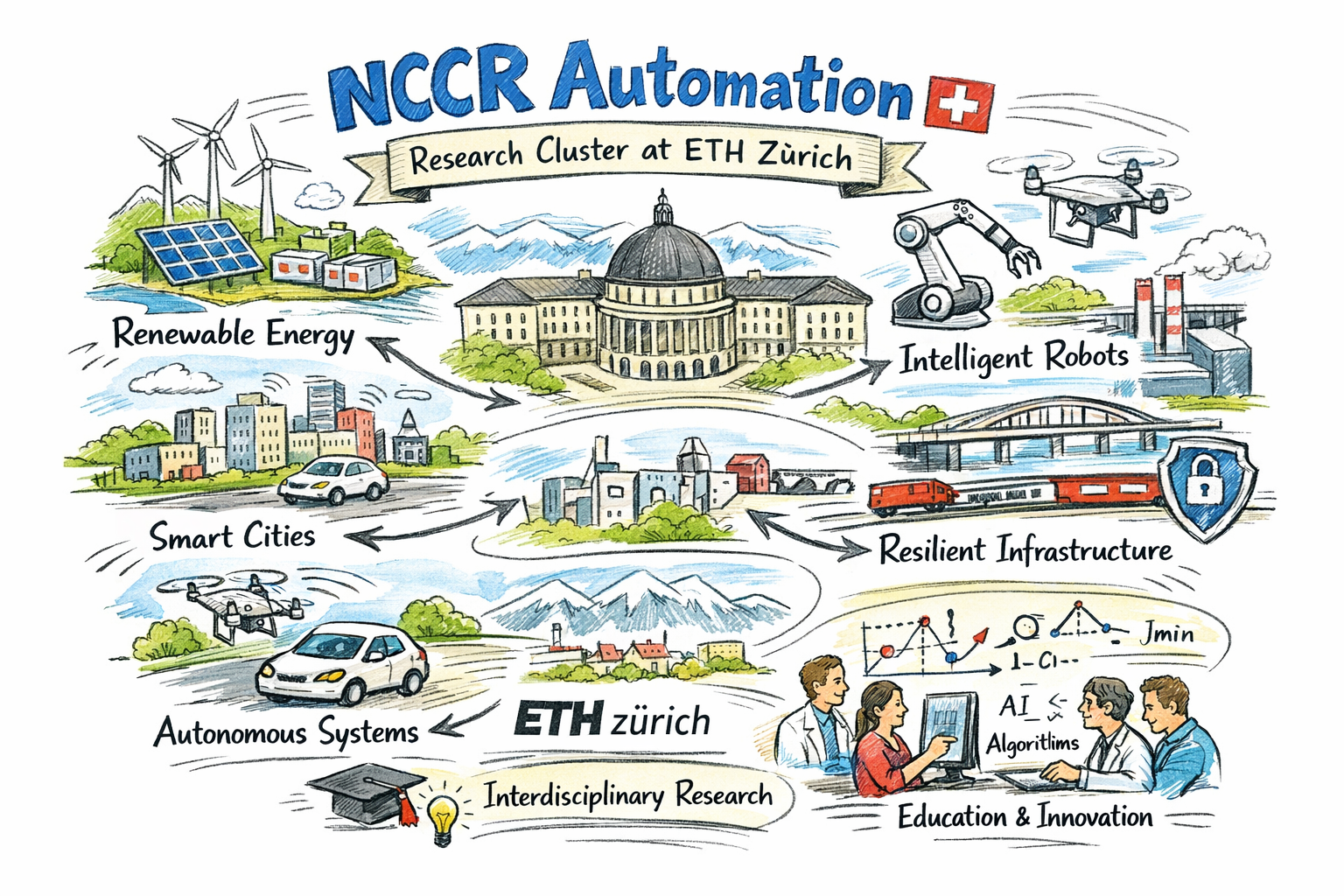
NCCR Automation: Collaboration and cutting edge research
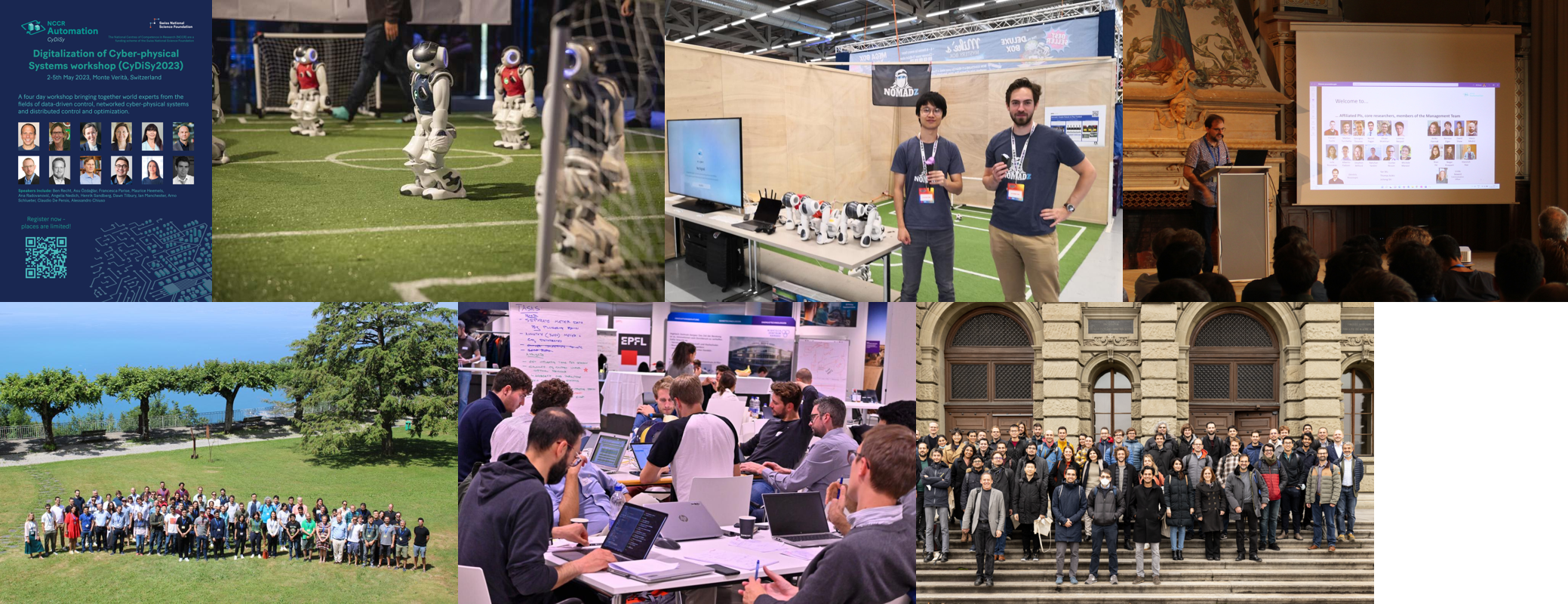
Teaching Leadership - ETH Zurich (IfA)
Quad-Rotors & Control Systems Experiments
Lead Teacher - Organization, Supervision, Technical Responsibility
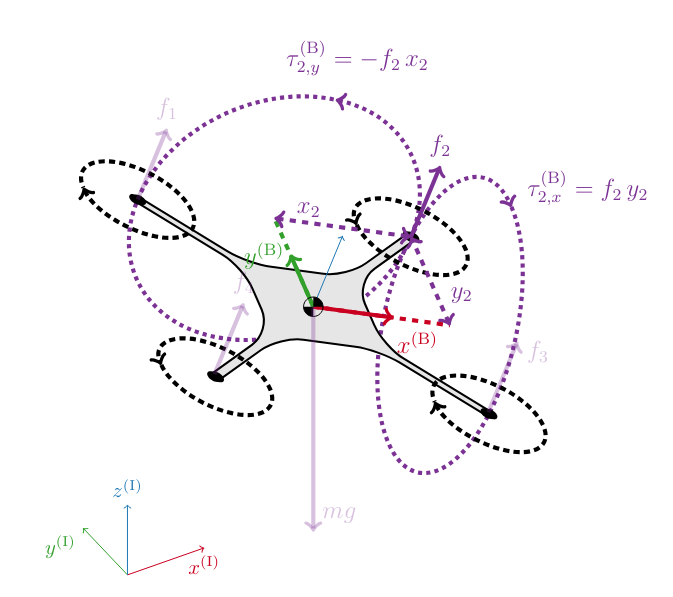
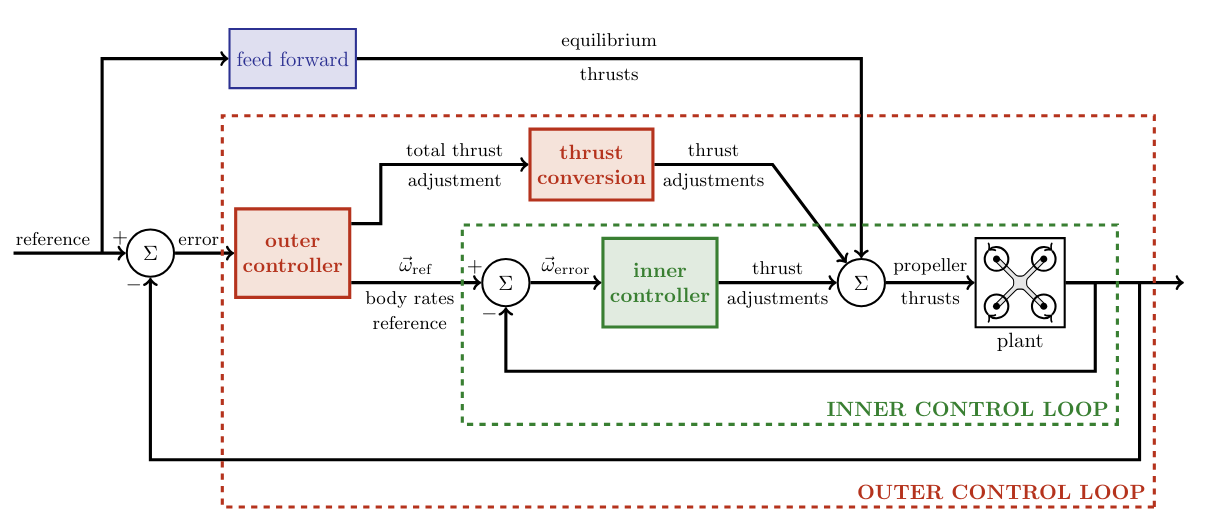
(Source: https://dfall.ethz.ch/pands.php)
PSL - Laboratory Construction and Program Development
- Photovoltaic Laboratory Construction
- Delegate of Group Leader
- Coordination of lab construction & equipment; setup of teaching experiments & Jupyter notebooks
- Challenge: Delays in equipment delivery & installation
- Solution: Proactive communication; Anticipatory task management
- CAS-ATE Program, Energy Science Center
- Lead Teaching Assistant
- Curation of teaching material baseline; coordination of contributors
- Challenge: Limited availability & uneven contributions
- Solution: Get commitments early; structured baseline to guide content; strategic pairing of contributors
NCCR Automation - Integrated Roles and Problem Solving
| Scientific Officer | Education Officer | Data Manager | |
|---|---|---|---|
| Role | Scientific Coordination | Educational coordination | Research data infrastructure |
| Tasks | International conferences, symposia | Internal retreats & workshops | Pipelines, GitLab, IntraNet |
| Challenges | Multi-institution alignment | Engagement & scale | Standardization & compliance |
| Solutions | Structured planning & stakeholder coordination | Modular formats & clear ownership | Governance frameworks & robust infrastructure |
Doctoral Research - Control & System Optimization
- Thesis: Efficient Operation of Energy Grids
Focus: Microgrid optimization and control
Keywords: Dynamical Systems; Control; Optimization; Mathematical Modeling - Projects: ERA-NET SmartGrids Plus | uGrip | CITIES (Centre for IT-Intelligent
Energy Systems)
Researcher in context of microgrids (power system context) and dynamical systems (building context). Collaboration with the University of Zagreb, Croatia (Microgrid Laboratory) and OFFICE, Germany (co-simulation basis) - Courses: Static and dynamic Optimization, Constrained Optimization, Model Predictive Control, Stochastic Adaptive Control, Teaching and Learning
ERA-NET SmartGrids Plus (uGrip)

- Challenge
Address the need to increase the resilience and security of the energy system via the concept of microgrids.
- Approach
- Co-optimize actors within microgrids
- Integrate with a co-simulation framework in a real demonstrator (lab), to achieve a higher Technological Readiness Level (TRL)
- Incorporate price-signals to establish Virtual Power Plants
- Result
- Demonstrator implementation at the University of Zagreb (Croatia) [1]
- Novel MPC formulation [2]
- Innovative system identification approach combining SINDYc with Bayesian modeling [3]
CITIES (Centre for IT-Intelligent Energy Systems)

The high densities of population, energy consumption, and energy and communications networks in cities offer the greatest potential for flexibility at the least cost, and the fact that cities account for 80% of global energy consumption and emissions make the urban environment an ideal setting for energy systems integration research. (CITIES)
CITIES (Centre for IT-Intelligent Energy Systems)
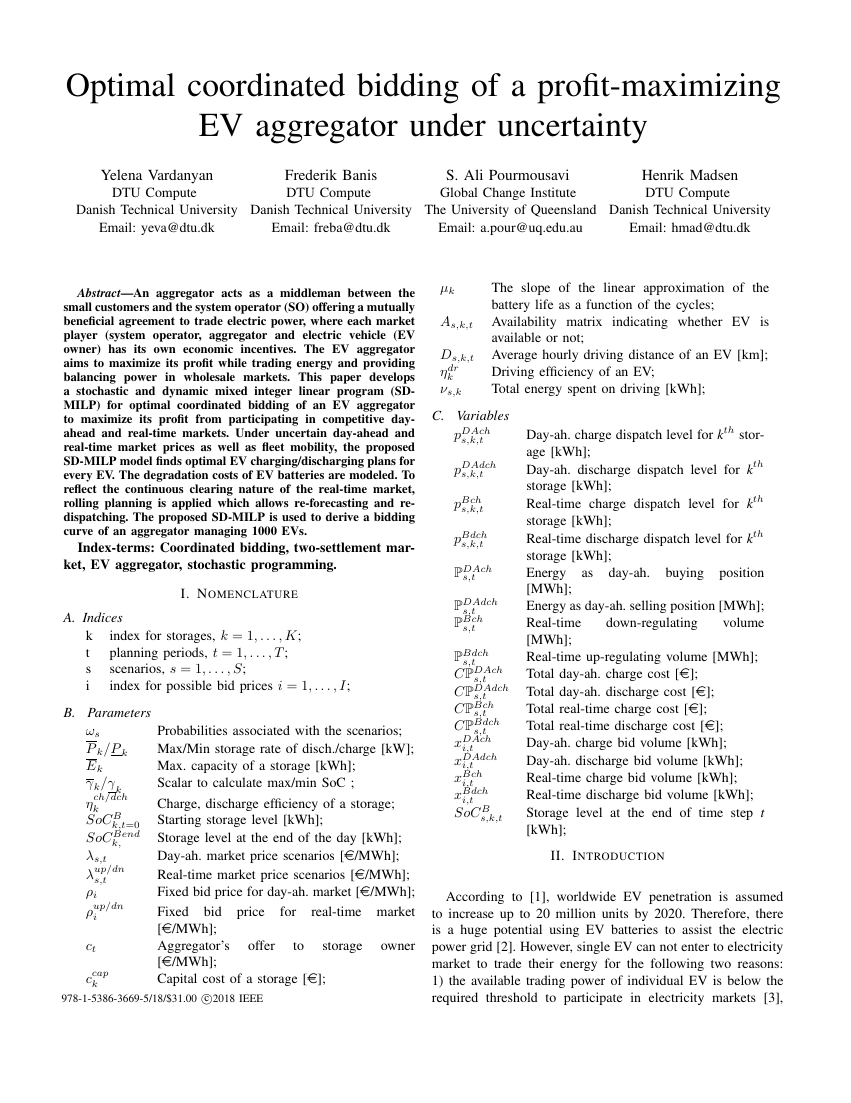
- Challenge
Contribute to the integration of Electric Vehicles (EVs) into the power market.
- Approach
- An aggregator facilitates energy trading between small customers, system operators (SO), and electric vehicle (EV) owners, aligning their economic incentives.
- The SD-MILP model accounts for uncertain market prices and fleet mobility, determining optimal charging/discharging plans for each EV, including battery degradation costs.
- Result [4]
- Rolling planning is employed to mimic the continuous nature of real-time markets, allowing for re-forecasting and re-dispatching.
- The proposed model is applied to derive a bidding curve for an aggregator managing 1000 EVs.
Key Publications
- Mateo Beus, Frederik Banis, et. al. “Three-level hierarchical microgrid control—model development and laboratory implementation”. In: Electric Power Systems Research 189 (Dec. 2020). doi:10.1016/j.epsr.2020.106758
- Frederik Banis et al. “Load Frequency Control in Microgrids using target adjusted Model Predictive Control”. In: IET Renewable Power Generation (2019). doi:10.1049/iet-rpg.2019.0487.
- Frederik Banis et al. “Prosumer Response Estimation Using SINDYc in conjunction with Markov-Chain Monte-Carlo Sampling”. In: ENERGIES. Smart Grids and Microgrids (2020). doi:10.3390/en13123183.
- Yelena Vardanyan, Frederik Banis, et. al. “ Optimal coordinated bidding of a profit-maximizing EV aggregator under uncertainty”. In: Proceedings of the 2018 IEEE international energy conference (ENERGYCON). IEEE, June 2018. doi:10.1109/ENERGYCON.2018.8398821.
Skill Overview
Algorithmic Knowledge (1), stronger knowledge in bold
- Modeling & Identification
- System Identification
- Deterministic (ARX, subspace, NARX, SINDy, sparse regression)
- Probabilistic (Bayesian, Markov Chain Monte Carlo, Gaussian Processes, Probabilistic State-Space)
- Model Reduction / Reduction of Order
- Balanced truncation, Dynamic Mode Decomposition, SINDy, Proper Orthogonal Decomposition
- Data‑Driven / Physics‑in‑formed Modelling
- Neural ODEs, Physics-Informed Neural Networks, GPs, hybrid physics‑ML
- System Identification
- Optimization
- Static (offline) optimisation
- LP, QP, NLP, IP, MIP, global optimisation, multi‑objective, meta‑heuristics
- Dynamic / Optimal Control
- Pontryagin, Dynamic Programming, HJB, stochastic optimal control
- Model Predictive Control (linear, nonlinear, robust, stochastic, adaptive)
- Robust / Distributionally robust optimisation, chance constraints
- Static (offline) optimisation
Algorithmic Knowledge (2), stronger knowledge in bold
- Control & Estimation
- State Estimation / Observers
- Luenberger, Kalman filter, EKF, UKF, Particle filter
- Classical & Modern Controllers
- Linear Quadratic Regulator, Linear Quadratic Gaussian, H‑∞, sliding‑mode, backstepping, adaptive control
- Learning‑Based Control
- Reinforcement learning (policy‑gradient, actor‑critic, model‑based RL)
- Learning‑based MPC, safe RL, control‑barrier functions
- State Estimation / Observers
- Stochastic & Uncertainty Methods
- Bayesian Inference & Markov Chain Monte Carlo
- Stochastic Programming & Scenario Optimisation
- Formal Methods & Verification
- Reachability / Safety Analysis
- Barrier & Lyapunov Functions
- Hybrid Systems & Mixed‑Integer MPC
Related Publication
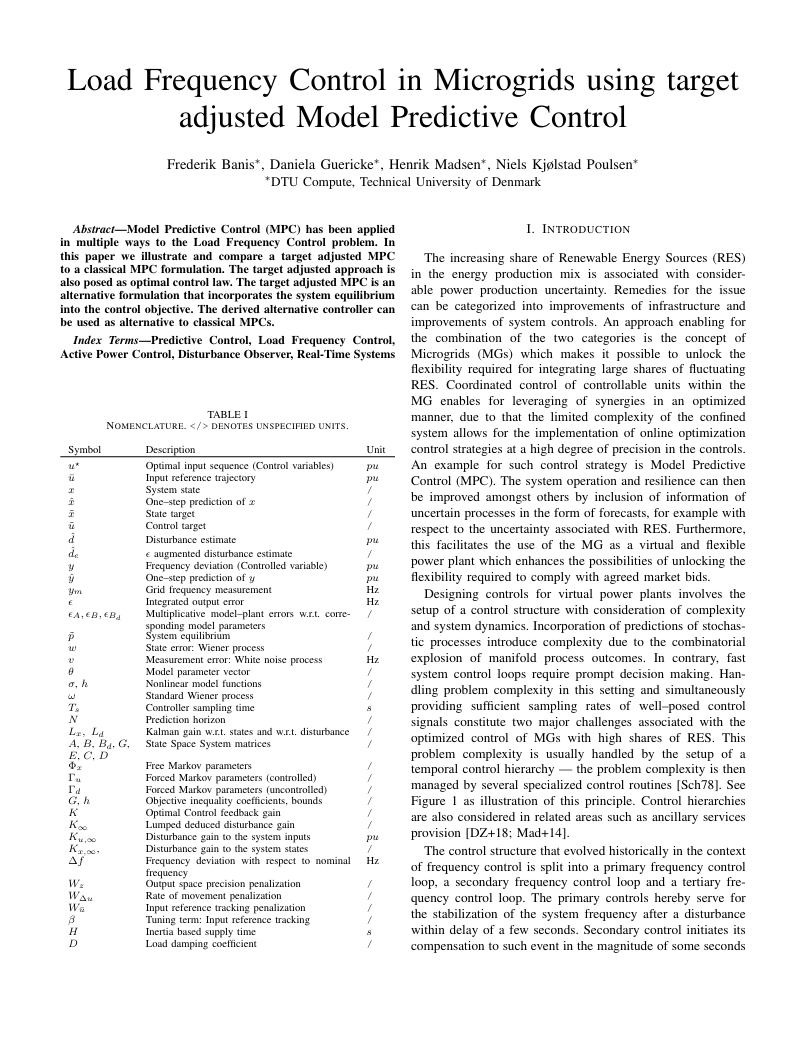
- The paper explores different applications of Model Predictive Control (MPC) for Load Frequency Control, focusing on a comparison between a traditional MPC and a target adjusted MPC.
- The target adjusted MPC is presented as an optimal control law that integrates the system’s equilibrium into its objectives, offering an alternative to classical MPC formulations.
- This new approach aims to enhance control performance by aligning with the system’s equilibrium state, providing a viable option alongside conventional MPC methods.
Algorithmic Knowledge (3), stronger knowledge in bold
- Forecasting & Prediction:
- ARIMA / SARIMA
- Hidden Markov Models
- Optimization & Decision-making
- Stochastic Programming (two-stage, multi-stage)
- Scenario-tree
- Chance-constrained optimization
- Dynamic Programming
- Mixed-Integer Linear Programming (unit commitment, economic dispatch)
- Non-convex optimization (branch-and-bound)
- Risk & Portfolio Management
- CVaR / VaR
- Multi-Objective (Pareto Front)
Algorithmic Knowledge (4), stronger knowledge in bold
- Simulation & Modeling
- Power System OPF (DCOPF, ACOPF)
- Demand-response / storage optimization
- Network-constraint modeling
- Machine-Learning & Data-Science
- Bayesian optimization
- Online learning (bandits, contextual bandits)
- Reinforcement Learning (policy-gradient)
- Deep Q-learning
- Feature-engineering & dimensionality reduction (PCA)
- Data-cleaning & anomaly detection
Related Publication
- An aggregator facilitates energy trading between small customers, system operators (SO), and electric vehicle (EV) owners, aligning their economic incentives.
- The paper introduces a stochastic and dynamic mixed integer linear program (SD-MILP) to optimize the coordinated bidding of an EV aggregator in day-ahead and real-time markets, aiming to maximize profit while managing energy trading and providing balancing power.
- The SD-MILP model accounts for uncertain market prices and fleet mobility, determining optimal charging/discharging plans for each EV, including battery degradation costs.
- Rolling planning is employed to mimic the continuous nature of real-time markets, allowing for re-forecasting and re-dispatching.
- The proposed model is applied to derive a bidding curve for an aggregator managing 1000 EVs.
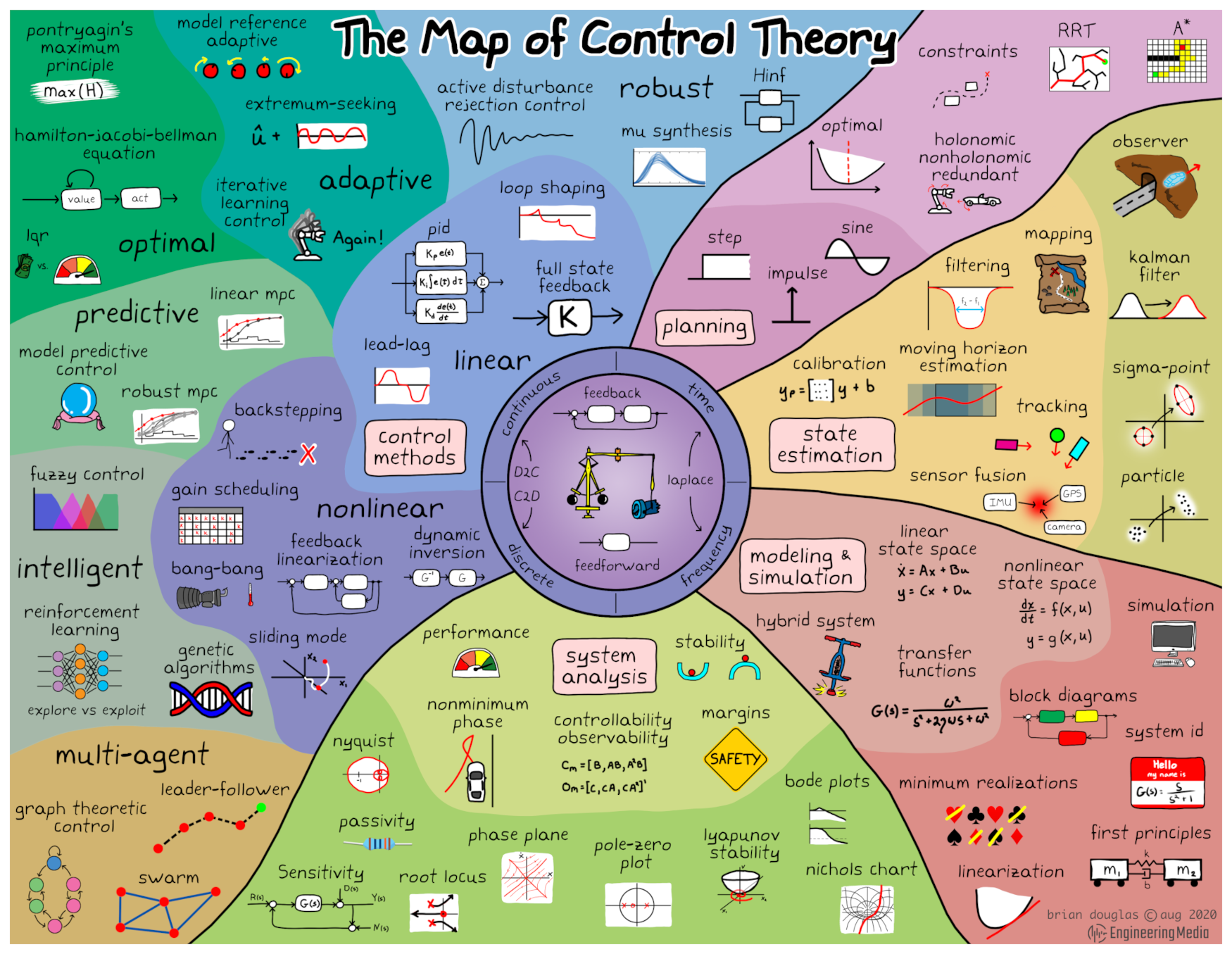
Control Map
Key Publications
- Mateo Beus, Frederik Banis, et. al. “Three-level hierarchical microgrid control—model development and laboratory implementation”. In: Electric Power Systems Research 189 (Dec. 2020). doi:10.1016/j.epsr.2020.106758
- Frederik Banis et al. “Load Frequency Control in Microgrids using target adjusted Model Predictive Control”. In: IET Renewable Power Generation (2019). doi:10.1049/iet-rpg.2019.0487.
- Frederik Banis et al. “Prosumer Response Estimation Using SINDYc in conjunction with Markov-Chain Monte-Carlo Sampling”. In: ENERGIES. Smart Grids and Microgrids (2020). doi:10.3390/en13123183.
- Yelena Vardanyan, Frederik Banis, et. al. “ Optimal coordinated bidding of a profit-maximizing EV aggregator under uncertainty”. In: Proceedings of the 2018 IEEE international energy conference (ENERGYCON). IEEE, June 2018. doi:10.1109/ENERGYCON.2018.8398821.
Cultural Alignment
- European-Chinese cross-cultural collaboration experience
- Comfortable working in international teams
- Strong interest in contributing to local tech ecosystem (Shanghai/Hangzhou)
- Values: Craftsmanship, continuous learning, teamwork, innovation
Closing
自动化与能源系统工程师 | Automation & Energy Systems Engineer
- 电子邮件 | Email: [email protected]
- 电话 | Phone: +86 (0) 178 5864 4506
- 微信 | WeChat: FreBaShuping
- 网站 | Website: https://shuping.work
- LinkedIn: https://www.linkedin.com/in/frederik-banis-53671a114

Appendix
🔶 Microgrid Optimization & Intelligent Control
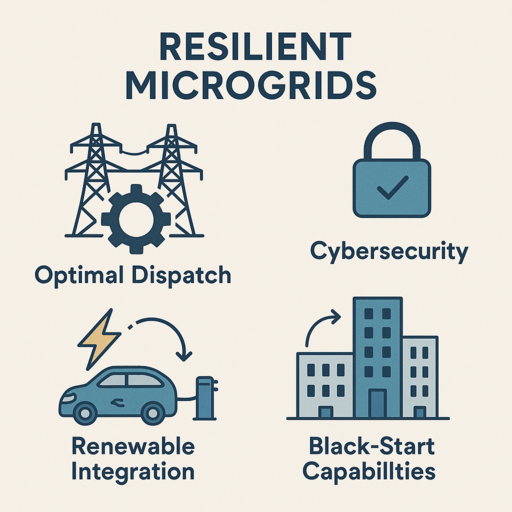
- Challenge Distributed energy systems must operate efficiently despite volatile demand, renewable fluctuations, and dynamic constraints.
- Approach
- Designed Model Predictive Control (MPC) frameworks
- Implemented grey-box models for real-world accuracy
- Developed flexibility indicators and scenario-based optimization
- Integrated multi-timescale decision layers
- Result
- More stable microgrid operation
- Scalable optimization workflows
- Methods validated in peer-reviewed publications (IEEE, IFAC, IET)
🔶 Microgrid Optimization & Intelligent Control
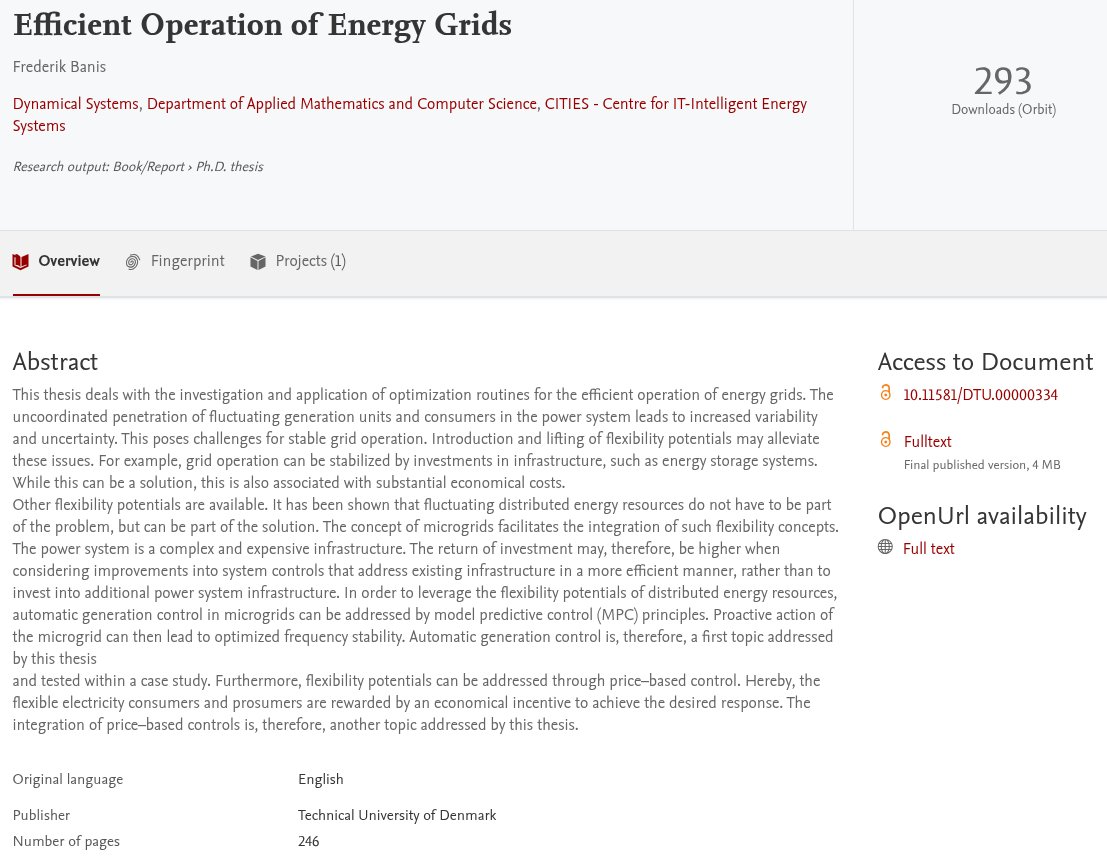
- Fluctuating generation/consumption in energy grids introduces instability, requiring flexibility solutions to manage variability and uncertainty.
- Microgrids with model predictive control (MPC) enable proactive frequency stability by leveraging distributed energy resources.
- Price-based control incentivizes flexible consumers/prosumers to support grid stability through economic signals.
- Optimizing existing infrastructure controls is more cost-effective than investing in new grid infrastructure for improved efficiency.
- The thesis explores MPC and price-based control as key strategies for integrating flexibility and enhancing grid operation.
Skills Tags: MPC · Optimization · Stochastic Control · Energy Systems · Python · Grey-box Models
🔶 Drone Automation & Control Education

- Challenge Make abstract control theory intuitive and practical for undergraduate engineers.
- Approach
- Designed lab sessions & interactive demos
- Guided students through system identification, state-space modeling, feedback control
- Debugged real-time quadrotor behavior with students
- Result A highly successful learning experience that bridges theory with practice — students see control theory come to life.
Skills Tags: Linear Control · State-Space Modeling · Teaching · MATLAB · Automation
🔶 Machine Learning for Energy Systems

- Challenge Energy systems require accurate predictions and anomaly detection to support automated control.
- Approach
- Deep learning for time-series forecasting
- Clustering for pattern discovery
- Hybrid ML–control pipelines
- Anomaly detection using statistical models + ML
- Result Improved predictive accuracy and more resilient control behavior under uncertainty.
Skills Tags: Deep Learning · Forecasting · Time-Series AI · Python · Hybrid Control
🔶 Modular Energy Hub Framework (Google Summer of Code)

- Challenge Energy hubs involve electricity, heat, cooling, storage, and conversion — modeling them requires modular, extensible tools.
- Approach
- Developed Python-based models with Pyomo + Oemof
- Implemented component abstraction layers
- Integrated optimization routines
- Result Framework adopted by open-source energy modeling communities; enabled transparent, scalable system simulations.
Skills Tags: Python · Pyomo · Simulation · Energy Hubs · Optimization
🔶 Thermodynamic Systems Engineering (Early Career)

- Challenge Evaluate energy performance of real systems—ventilation, refrigeration, and CO₂ cooling—under practical constraints.
- Approach
- Modeled CO₂ ice rink system behavior
- Conducted efficiency measurements for decentralized ventilation
- Analyzed thermodynamic and control interactions
- Result A strong engineering base that later shaped advanced modeling and control work.
Skills Tags: Thermodynamics · Modeling · Field Data · Energy Engineering
🔶 Research Coordination & Data Stewardship

- Challenge Large research consortia require structured collaboration, transparent data management, and consistent quality.
- Approach
- Built reproducible data systems
- Coordinated research workflows
- Managed academic–industry communication
- Organized knowledge-sharing events
- Result A well-functioning automation research ecosystem with improved collaboration and reproducibility.
Skills Tags: Data Stewardship · Project Management · Cross-Institution Collaboration